Styles

Heriz Rugs: Bold Persian Carpets for Timeless Interiors

Heriz Rugs

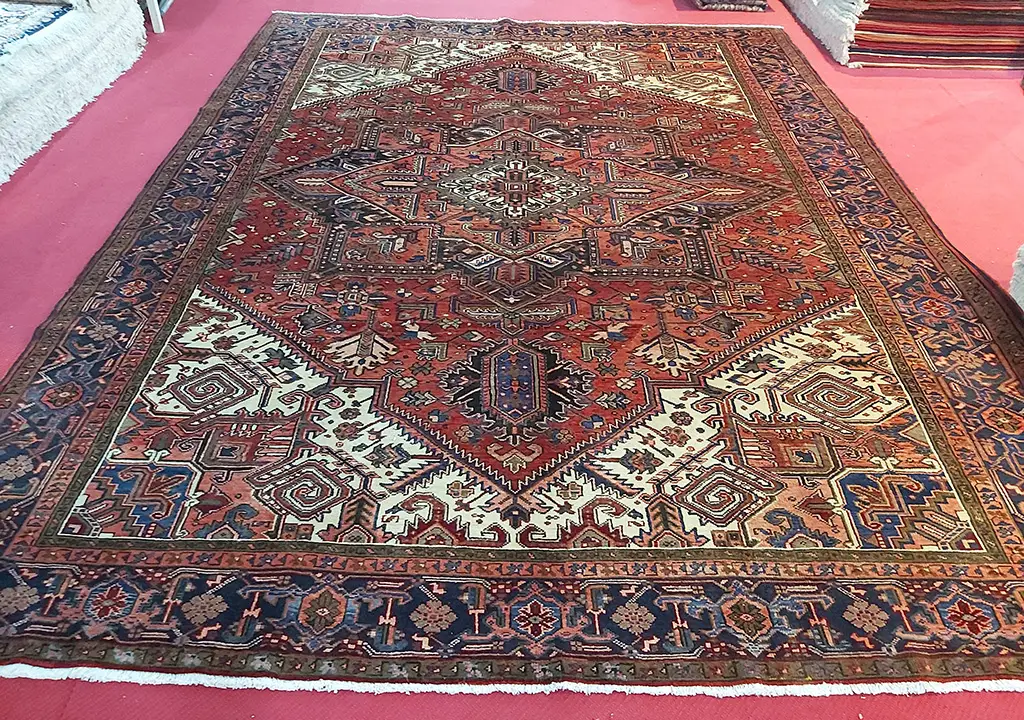
A Heriz rug doesn’t simply decorate a room—it defines it. With bold geometry, commanding medallions, and a palette that feels both historic and effortlessly current, Heriz carpets have become a signature choice for interiors that value presence, provenance, and performance.

Woven in the Heriz region of northwest Iran, these rugs are celebrated for a look that is unmistakably “architectural”: strong lines, confident symmetry, and motifs designed to read beautifully from across a space—whether beneath a sculptural dining table or anchoring a minimalist living room.

The Origin of Heriz Rugs

Heriz rugs originate from the Heriz district near Tabriz in northwest Iran—an area with a long weaving tradition known for producing carpets that are visually powerful and built to last. Historically, these rugs earned international admiration for their ability to deliver both design impact and everyday durability, making them equally at home in private residences and refined hospitality spaces.

In the language of interiors, a true Heriz is a statement piece: unmistakable, substantial, and timeless.

The Signature Motifs of a Heriz Rug

Heriz design is prized for its clarity—motifs are bold and intentional, not delicate or overly busy. The result is a rug that feels sophisticated in classic homes and unexpectedly perfect in modern spaces.

1. The Grand Medallion

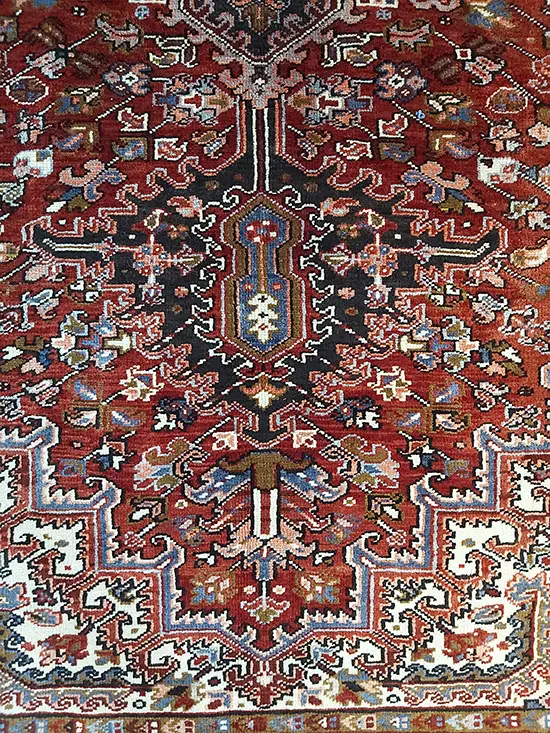
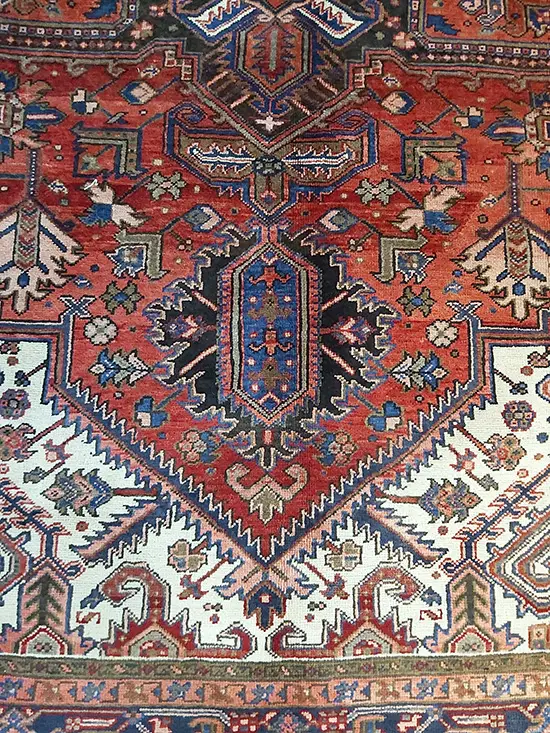
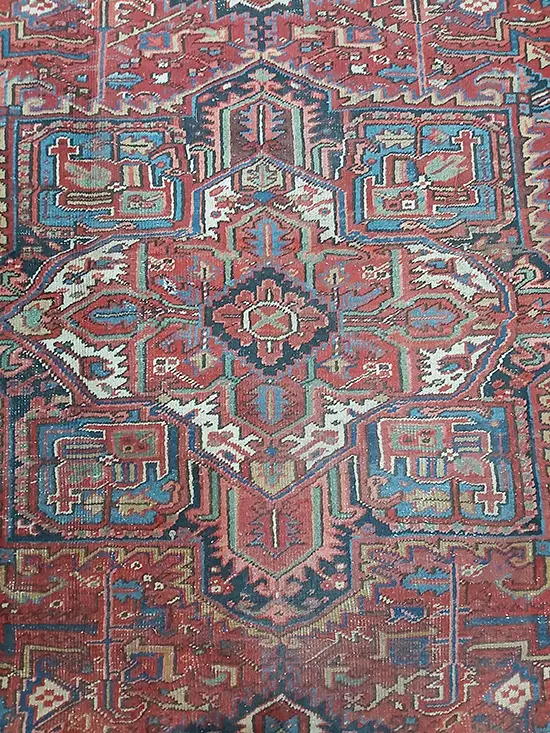
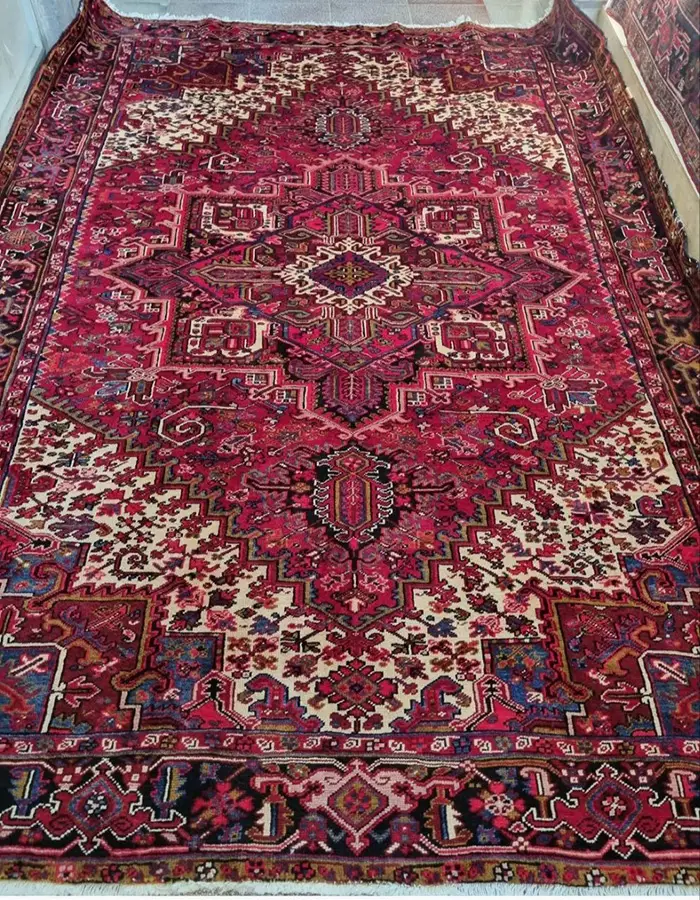
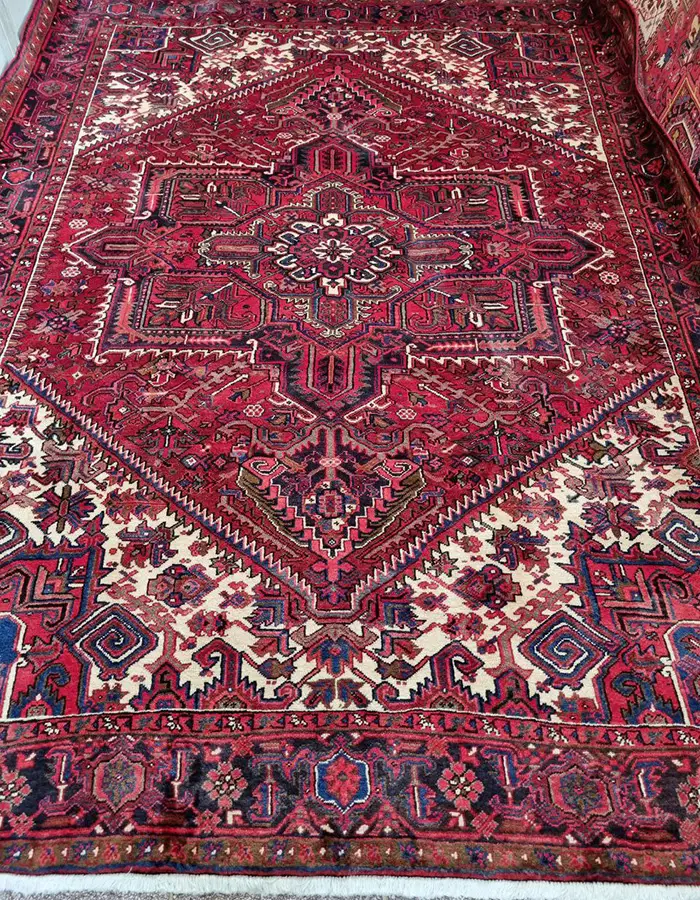
The heart of the Heriz aesthetic is the central medallion, often angular and dramatically outlined. It acts like an architectural focal point, organizing the room visually—ideal for open-plan living, dining rooms, and large-scale interiors.
Design effect: A medallion creates a natural “center” that makes furniture placement feel instantly balanced.

2. Corner Spandrels: The Elegant Frame

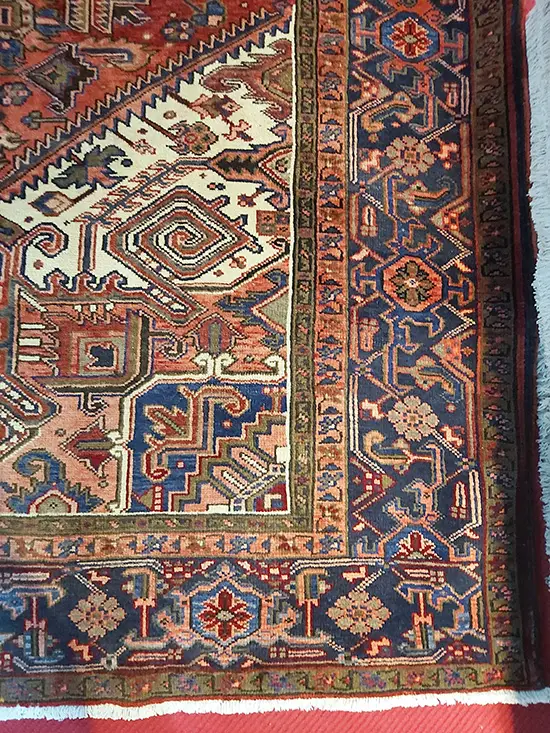
Heriz rugs often feature distinct corner spandrels that echo the central medallion, creating a framed composition. This is one reason Heriz rugs feel so “complete” and intentional—like a finished artwork.
Design effect: Spandrels provide structure and formality without making the rug feel rigid.

3. Stylized Palmettes and Vinework

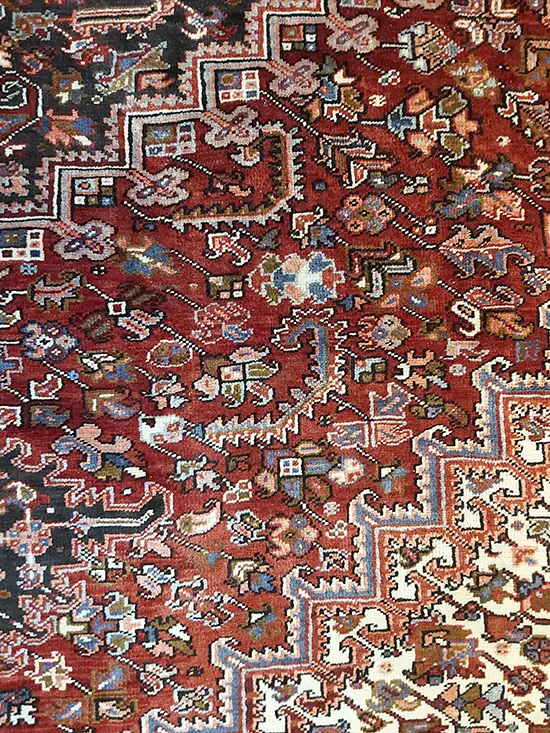
While Heriz rugs are known for geometry, they frequently include stylized palmettes, rosettes, and vine motifs rendered in a more angular, graphic manner. This blend of floral heritage and geometric discipline gives Heriz its unique sophistication.
Design effect: These motifs add richness and depth—especially when paired with clean-lined furniture and neutral walls.

4. Serrated Edges, Pendants, and Stepped Geometry

Look closely at many medallions and you’ll see stepped edges, serrations, and pendant-like extensions. These details add rhythm and visual energy, helping the rug feel dynamic rather than static.
Design effect: The crisp geometry makes Heriz feel remarkably contemporary—especially in curated, luxury modern interiors.

The Signature Motifs of a Heriz Rug

“Heriz” is both a place and a broader design family. Over time, the market has used additional names to describe variations in drawing, spacing, and historical character. Here are the key styles you’ll encounter:

1. Classic Heriz

This is the iconic look most people recognize:
Bold central medallion
Strong border architecture
Confident contrast and visual weight
Best for: Living rooms, dining rooms, offices—anywhere you want a grounded, elevated statement.

2. Serapi Style (Often Used for Earlier, Airier Heriz)

“Serapi” is commonly used to describe Heriz-region rugs with:
A more open, spacious field
A refined sense of proportion
A calmer, more “breathable” composition
Best for: Luxury minimalism, quiet elegance, and rooms where you want grandeur without density.

3. Bakshaish Style (Expressive, Village-Character Variations)

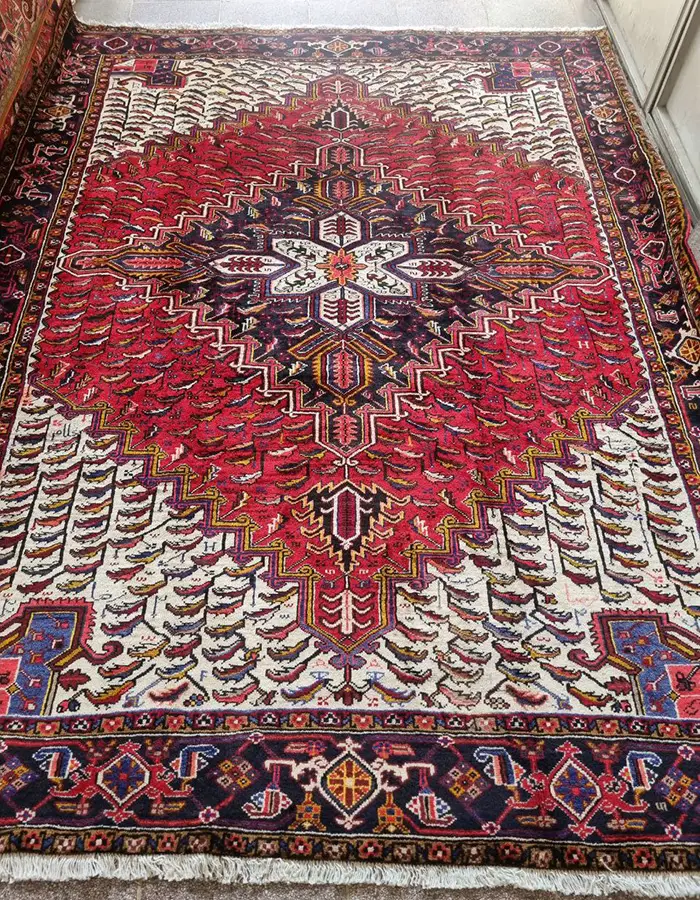
Bakshaish designs are often discussed alongside Heriz. They can feel slightly more spontaneous and artistic in rhythm—still bold, but with a more “hand-composed” sensibility.
Best for: Eclectic luxury, collector-style interiors, and spaces that embrace personality.

4. Village & District Variations (e.g., Gorevan and Others)

Within the broader Heriz area, neighboring towns and villages produce related aesthetics that may differ in:
Motif scale
Border choices
Color balance and spacing
Best for: Clients who want the Heriz spirit, with a distinct regional nuance.

Color Palettes That Define Heriz Luxury

Heriz rugs are known for saturated, high-contrast palettes—often deep reds, indigo blues, ivory highlights, and beautifully aged tonal variation. In luxury interiors, this is a gift: a Heriz rug can introduce color and warmth without sacrificing sophistication.

Styling tip: Let the rug lead. Pair it with quiet materials—linen, oak, stone, brushed metal—and the room will feel curated, not crowded.

Why Designers Choose Heriz Again and Again

Heriz rugs remain a favorite among interior designers for three reasons:

1. Presence: The architecture of the pattern instantly elevates a room.

2. Versatility: They complement both traditional and modern furniture.

3. Durability: They are practical enough for real life while still feeling refined.

A Heriz rug is the rare piece that can be both a collector’s choice and an everyday essential.